

Muscle tightness, soreness and nagging pain can slow you down after workouts, long workdays or sports. Many people now use deep tissue therapy to recover faster and stay active with less pain.
In this guide, you’ll learn what deep tissue therapy is, its top 10 benefits for muscle recovery, and how it works

What Is Deep Tissue Therapy?
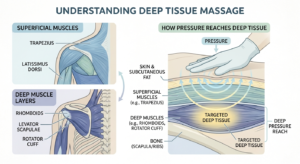
Deep tissue therapy is a type of massage that uses slow, firm pressure to reach deeper layers of muscle and connective tissue (fascia). It is often used for sports injuries, chronic muscle pain and stiffness, rather than just relaxation.
Therapists work more slowly and with more focused pressure than in a regular relaxation massage. This helps release tight “knots,” break up adhesions and improve blood flow in problem areas.
Top 10 Benefits of Deep Tissue Therapy for Muscle Recovery
1. Reduces post‑workout muscle soreness
After hard exercise, you may feel delayed‑onset muscle soreness (DOMS) for 24–72 hours. A sports science review found that massage can reduce DOMS intensity by about 13%, making it one of the most effective recovery tools. This means you can get back to training or work sooner with less discomfort.
2. Speeds up the healing of muscle damage
Intense activity can cause tiny tears in muscle fibres. Studies show sports massage helps lower blood levels of creatine kinase (CK), a marker of muscle damage, and improves jump performance within 48 hours compared with simple stretching. Deep tissue work supports your body’s natural repair process so muscles heal more efficiently.
3. Improves blood flow and nutrient delivery
Deep, sustained pressure increases local circulation, bringing more oxygen and nutrients to tired muscles while helping remove waste products like lactic acid. Over several weeks of regular deep tissue therapy, athletes in research showed better recovery and flexibility, especially those in strength and team sports.
4. Releases chronic muscle tension and “knots”
Many workers and tradies hold tension in their neck, shoulders, hips or lower back. Deep tissue therapy targets stubborn trigger points that a lighter massage may not reach. When these knots release, movement feels easier and less restricted, which helps your muscles recover after long days of sitting or physical labour.
5. Enhances flexibility and range of motion
Tight muscles restrict joints and change the way you move, which can increase your risk of strain. By softening tight bands of tissue and breaking up adhesions, deep tissue therapy improves flexibility and range of motion. This is especially helpful if you play sports or are returning from an old injury.
6. Supports pain relief without relying only on medication
A large review of massage therapy found it can reduce pain more than doing nothing, sham treatments and even some active therapies. For people with ongoing muscle or joint pain, deep tissue therapy can be a useful part of a broader pain management plan, alongside exercise, stretching and medical advice when needed.
7. Helps prevent future injuries
Muscles that stay tight and tired are more likely to strain or tear. By improving tissue quality, circulation and movement patterns, deep tissue therapy can lower your risk of overuse injuries. This is valuable for runners, gym‑goers and social sports players who train several times a week.
8. Supports faster sports performance recovery
In both team and strength athletes, bi‑weekly deep tissue sessions over eight weeks improved performance, muscle strength and flexibility compared to usual routines. For active people, this means better training consistency, fewer missed sessions and more enjoyable competition.
9. Reduces stress and improves sleep
While deep tissue is firm, many people still feel deeply relaxed afterwards. Research shows massage can ease anxiety and improve overall quality of life in people with pain. Better relaxation and sleep allow your muscles and nervous system to recover more completely between training days or busy work weeks.
10. Supports people living with chronic pain
Chronic pain affects roughly one in five adults and often limits daily activities. Deep tissue therapy, when used carefully by a trained therapist, can reduce muscle guarding, improve movement confidence and complement medical care for conditions involving long‑term musculoskeletal pain.
Deep Tissue Therapy vs Regular Massage
| Feature | Deep Tissue Therapy | Regular Relaxation Massage |
| Pressure level | Firm to deep, focused on problem areas | Light to medium, full‑body focus |
| Main goal | Muscle recovery, pain relief, mobility | Relaxation, stress relief |
| Target tissues | Deep muscles, fascia, adhesions | Surface muscles and general tension |
| Ideal for | Athletes, chronic pain, old injuries, tight areas | Stress, mild tension, first‑time massage clients |
| After‑effect | “Good soreness” then ease of movement | Immediate calm and lightness |

Who Should Consider Deep Tissue Therapy?
Deep tissue therapy may be a good option if you:
- Have ongoing muscle tightness or “knots” that do not improve with stretching
- Play regular sport, go to the gym or run and feel sore for days afterwards
- Sit for long hours and feel stiff in your neck, shoulders or lower back
- Are you recovering from an older muscle strain (with medical clearance)
- Have tried regular massage, but still feel deep tension remains
If you prefer a very light touch or have certain medical conditions, your therapist can suggest gentler services such as relaxation or remedial massage instead.
Deep tissue therapy is more than just a “hard massage.” Used correctly, it supports muscle recovery, pain relief and better performance for everyday people and athletes in Bella Vista.
If you want to move more freely, recover faster and feel less restricted, booking a deep tissue session at Move Origin can be a powerful next step. Our therapists can also guide you towards other services, such as relaxation, remedial or sports‑focused massage, based on your needs.
FAQs
1. Is deep tissue therapy good for muscle recovery?
Yes. Research shows massage can reduce delayed‑onset muscle soreness and pain, and improve recovery markers like flexibility and performance after exercise. Deep tissue work targets deeper muscle layers, which makes it especially helpful after heavy training.
2. How often should I get deep tissue therapy for best results?
For active people, once every 1–2 weeks during heavy training blocks works well. If you are managing chronic pain or very tight muscles, weekly sessions for a short period may help, then you can move to a maintenance plan with your therapist.
3. Does deep tissue therapy hurt?
You may feel strong pressure and some “good pain,” especially on tight spots. It should never feel sharp, burning or unbearable. You should be able to breathe and talk. Tell your therapist if pressure is too much so they can adjust.
4. Can deep tissue therapy replace medical treatment?
No. It is a supportive therapy, not a replacement for medical care. See your doctor for sudden, severe or unexplained pain, numbness, weakness or injuries. Deep tissue therapy can then be combined with medical advice, exercise and rehab as part of a full plan.
5. Who should avoid deep tissue therapy?
People with certain conditions (such as uncontrolled blood pressure, recent surgery, fractures, severe osteoporosis, active infections or blood clots) may need to avoid or modify deep pressure. Always share your medical history and follow your doctor’s advice before booking.
6. Is deep tissue therapy better than a regular massage?
It depends on your goal. For stress relief and general relaxation, a regular massage is often enough. For stubborn tightness, sports recovery or long‑term muscle pain, deep tissue therapy usually gives more targeted results because it reaches deeper layers.
7. Is deep tissue therapy suitable for beginners?
Yes, if you like firmer pressure and communicate clearly. Your first session at Move Origin in Bella Vista can be adjusted to medium‑deep work so you get the benefits without feeling overwhelmed. Over time, your therapist can increase pressure as your body adapts.
