
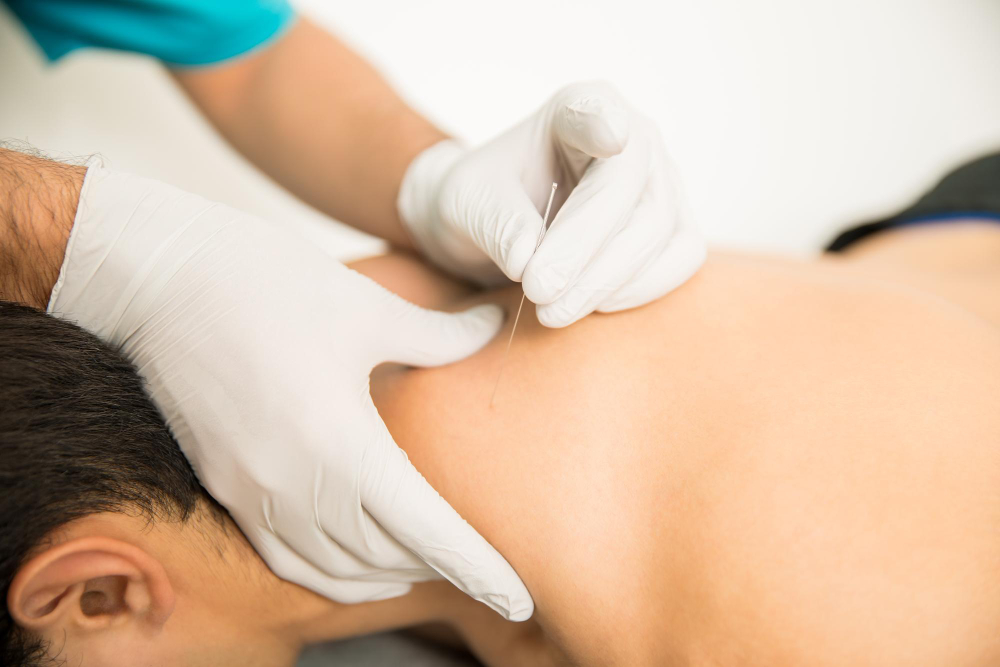
Both dry needling massage and trigger point therapy target muscle knots to relieve pain, but they work in very different ways. Dry needling uses a thin needle inserted directly into the tight muscle. Trigger point therapy uses hands-on manual pressure instead. One uses needles; the other uses touch. That is the core difference.
Both are effective, drug-free ways to address muscle pain, tension, and restricted movement. At Move Origin in Bella Vista, our trained therapists offer both treatments and will help you choose the right one for your body.
What Is Dry Needling Massage?
Dry needling is a clinical technique where a therapist inserts a very thin, sterile needle into a trigger point, a tight, knotted band of muscle. The needle does not inject anything (hence the word “dry”). Instead, it triggers a small twitch response in the muscle, signaling it to release tension and relax.
It is commonly used for:
- Chronic neck and back pain
- Sports injuries and overuse conditions
- Tension headaches and jaw tension (TMJ)
- Myofascial pain syndrome
- Shoulder pain and plantar fasciitis
Clinical studies have reported more than 70% improvement in pain scores for musculoskeletal conditions treated with dry needling. At Move Origin, dry needling massage is always performed by trained therapists using single-use, sterile needles

What Is Trigger Point Therapy?
Trigger point therapy is a hands-on massage technique. The therapist applies firm, sustained pressure to specific trigger points using their fingers, thumbs, or specialised tools. This sustained pressure gradually releases muscle tightness and interrupts pain signals being sent to the nervous system.
It is effective for:
- Releasing tight muscle bands and reducing stiffness
- Treating referred pain (pain felt away from its source)
- Improving circulation and nutrient flow to affected muscles
- Correcting postural imbalances
- General muscle tension, fatigue, and soreness
Research suggests that up to 85% of chronic pain cases involve trigger points in some form. Trigger point therapy is one of the most accessible and versatile treatments available — suitable for everyone from desk workers to professional athletes.

Key Differences Between Dry Needling and Trigger Point Therapy
Here is a clear side-by-side comparison:
| Feature | Dry Needling Massage | Trigger Point Therapy |
| Technique | Needle inserted into trigger point | Manual pressure by fingers/thumbs/tools |
| Tools Used | Thin sterile acupuncture needle | Hands, elbows, massage tools |
| Discomfort Level | Brief twitch/ache sensation | Tender pressure, generally tolerable |
| Target Tissue | Deep muscle and fascia | Superficial to deep muscle layers |
| Conditions Treated | Chronic pain, sports injuries, headaches | Tension, referred pain, postural issues |
| Recovery Time | 24–48 hrs mild soreness | Minimal — same or next day |
| Best Suited For | Stubborn deep knots, faster results | Needle-averse clients, general relief |
Scientific Evidence and Effectiveness
Both therapies have meaningful research support. Dry needling has demonstrated positive results for neck pain, shoulder impingement, lower back pain, and sports injuries across multiple clinical trials. Trigger point therapy has decades of use in physiotherapy and remedial massage, with strong evidence for myofascial pain relief and tension-related conditions.
To put the scale in context: musculoskeletal conditions affect over 1.7 billion people globally — making effective, non-drug pain relief more important than ever. Both therapies offer real, evidence-based options that address root causes rather than masking symptoms.

Which Therapy Is Better for Muscle Pain?
The honest answer is: it depends. Dry needling tends to produce faster results for deep, stubborn trigger points that have not responded to massage alone. Trigger point therapy is gentler and better suited for people who want a fully hands-on experience or prefer to avoid needles.
At Move Origin, we never apply a one-size-fits-all approach to pain relief therapy in Bella Vista. Every client receives a thorough assessment before any treatment begins — because your body and your pain history are unique.
Who Should Choose Dry Needling Massage in Bella Vista?
Dry needling may be the right fit if you:
- Have deep, chronic trigger points that massage has not fully resolved
- Are recovering from a sports injury or overuse condition
- Experience regular tension headaches or jaw pain
- Have been diagnosed with myofascial pain syndrome
- Want faster results from fewer sessions
Athletes and active individuals seeking sports massage in Bella Vista often benefit most from incorporating dry needling into their recovery plan.
When Is Trigger Point Therapy a Better Option?
Trigger point therapy is often the preferred choice if you:
- Have a needle phobia or feel uncomfortable with dry needling
- Have certain skin conditions or medical contraindications for needling
- Prefer a fully hands-on, equipment-free treatment
- Are new to massage therapy and want to ease in gently
- Need muscle pain treatment near me with zero downtime
Can These Therapies Be Combined?
Yes, and for many clients, combining them delivers the best results. A typical session at Move Origin might involve dry needling to release deep trigger points first, followed by hands-on trigger point therapy to address surrounding muscle tension. This integrated approach is especially effective for chronic pain, post-injury recovery, and lasting myofascial pain relief.
Your therapist will monitor your body’s response and adjust your plan session by session — always prioritising your comfort and progress.
Book Your Consultation at Move Origin, Bella Vista
You do not have to keep living with muscle pain, tension, or restricted movement. Whether dry needling or trigger point therapy is right for you, or a combination of both, the team at Move Origin in Bella Vista is here to help you find out.
Book your consultation at Move Origin today and take the first real step toward lasting pain relief in Bella Vista.
Frequently Asked Questions
Does dry needling hurt?
Most people feel a brief twitch or dull ache when the needle reaches a trigger point. This is a normal, expected response and usually fades within seconds. After the session, you may notice mild muscle soreness for 24–48 hours — similar to how muscles feel after exercise. Staying hydrated helps speed recovery.
Is dry needling better than trigger point therapy?
Neither is universally better. Dry needling works well for deep, stubborn knots and tends to produce faster results. Trigger point therapy is gentler and ideal for those who prefer no needles. The best choice depends on your condition, sensitivity, and personal comfort. A consultation at Move Origin helps you decide.
How many sessions do I need?
This varies. Many clients see meaningful improvement in 2–4 sessions. Chronic or long-standing conditions may require 6 or more. Your therapist at Move Origin will reassess after each session and adjust your plan to ensure you are progressing toward lasting relief — not just short-term results.
Is dry needling safe?
Yes, when performed by trained, qualified professionals. At Move Origin in Bella Vista, all dry needling is conducted using sterile, single-use needles following strict hygiene standards. A full health intake is completed before every session to screen for any contraindications. Safety is always our first priority.
What is the recovery time after dry needling?
Most clients experience 24–48 hours of mild muscle soreness following dry needling. Light movement, stretching, and drinking plenty of water can help. Trigger point therapy typically has even less downtime — most people return to normal activity the same day. Your therapist will provide specific aftercare advice.
Which therapy is better for sports injuries?
Dry needling is particularly well-suited to sports injuries, especially repetitive strain, muscle tears, and chronic post-exercise tightness. It can accelerate recovery by quickly releasing deep trigger points. Sports massage in Bella Vista at Move Origin often incorporates dry needling as part of a broader injury recovery protocol.
Can dry needling and trigger point therapy be combined?
Absolutely. Combining both therapies is one of the most effective approaches for complex or long-standing muscle pain. Dry needling releases deep knots; trigger point therapy then works through surrounding tissue tension. Together, they offer more comprehensive myofascial pain relief — and many of our clients get their best results this way.
