
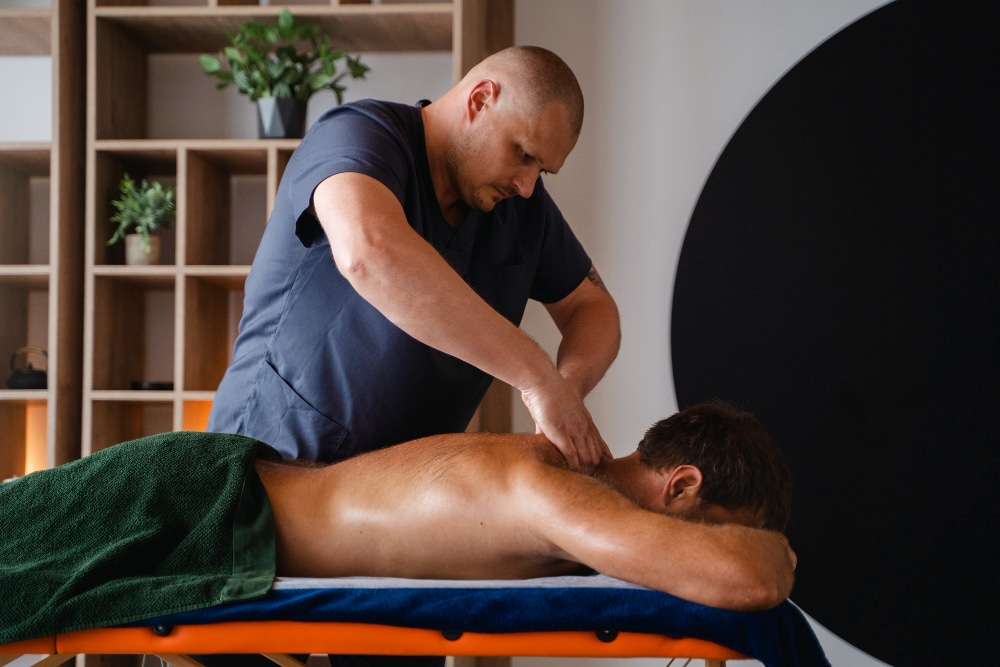
While both timing options offer unique benefits, post-workout sports massage is scientifically proven to be superior for athletic recovery. Research shows it reduces muscle soreness by up to 30%, accelerates recovery by 25-40%, and addresses the underlying mechanisms of delayed onset muscle soreness (DOMS).
Pre-workout massage, however, excels at warming muscles, improving mobility, and preparing your body for peak performance. The ideal strategy uses both strategically throughout your training cycle.
What Is Sports Massage Therapy?
Sports massage therapy is a specialized form of manual therapy designed specifically for athletes and active individuals. Unlike general relaxation massage, sports massage uses targeted techniques, including deep pressure, stretching, and rhythmic movements, to address muscle tightness, improve circulation, and accelerate recovery from training stress.
Licensed sports massage therapists apply techniques like effleurage (long, gliding strokes), petrissage (kneading movements), and trigger point therapy to manipulate soft tissue, enhance blood flow, and promote healing. The therapy works by flushing out metabolic waste products like lactic acid that accumulate during intense exercise while simultaneously delivering oxygen and nutrients to tired muscles.
For athletes at any level, from competitive professionals to weekend fitness enthusiasts, sports massage therapy bridges the gap between training intensity and recovery capacity, helping you train harder and bounce back faster.
Pre-Workout Sports Massage: Benefits and Best Practices
Pre-workout (or pre-event) massage prepares your muscles, nervous system, and mind for the physical demands ahead. Performed 10-15 minutes before exercise, a light pre-workout massage session activates muscles and enhances the quality of your warm-up without causing fatigue.
How Pre-Exercise Massage Boosts Performance?
Increased Blood Flow and Muscle Temperature: Light massage stimulates circulation, warming muscles by delivering more oxygen. Warm muscles are more flexible, less prone to tears, and respond faster to movement demands.
Enhanced Flexibility and Range of Motion: Pre-workout massage gently stretches and lengthens muscle fibers, improving joint mobility. This means you can move through your full range of motion safely, reducing compensation patterns that lead to injury.
Mental Preparation and Stress Reduction: Beyond the physical, pre-workout massage lowers cortisol (stress hormone) while boosting endorphins and serotonin. This mental reset sharpens focus, eases pre-competition anxiety, and enhances confidence—giving you a psychological edge.
Injury Prevention: By releasing tension in key areas, pre-workout massage reduces the risk of strains and sprains. Muscles that are warm, mobile, and relaxed are significantly less likely to sustain acute injuries during intense activity.
Pre-Workout Technique Guidelines
The key to effective pre-workout massage is keeping it light and brief. Sessions should last 10-15 minutes maximum, using gentle effleurage, light petrissage, and brief vibration techniques. Avoid deep tissue work before exercise, research shows deep massage before activity can actually reduce muscle strength by up to 9%. The goal is to stimulate, not exhaust.
Post-Workout Sports Massage: Superior Recovery Benefits
Post-workout (or post-event) massage represents the gold standard timing for sports massage therapy. Administered within 2-4 hours after intense training, post-exercise massage directly targets the physiological mechanisms responsible for soreness, fatigue, and prolonged recovery.
Comparative effectiveness of pre-workout versus post-workout sports massage therapy across key recovery and performance metrics
How Post-Exercise Massage Accelerates Recovery?
Dramatic DOMS Reduction: Delayed onset muscle soreness typically peaks 24-48 hours after intense or unfamiliar exercise. Research meta-analyses involving over 500 participants consistently demonstrate that massage therapy reduces DOMS by approximately 13-30% compared to passive recovery. For athletes with back-to-back training sessions or multi-day competitions, this reduction in soreness is transformative—allowing you to train hard again sooner and with greater comfort.
25-40% Faster Recovery Times: Post-workout massage significantly accelerates the recovery of muscle strength and function. Studies show athletes receiving regular post-exercise massage report recovery times that are 25-40% faster than those relying solely on passive rest. This is because massage actively flushes metabolic byproducts (like lactic acid) from muscles while promoting nutrient delivery to healing tissues.
Reduced Inflammation and Improved Circulation: Massage stimulates blood and lymphatic flow, removing waste products that contribute to inflammation and pain. By enhancing microcirculation, post-workout massage ensures damaged muscle fibers receive the oxygen and nutrients needed for optimal repair.
Improved Sleep and Stress Recovery: Post-exercise massage triggers relaxation responses that promote deeper, more restorative sleep, a critical component of athletic recovery. Better sleep quality accelerates the body’s natural healing processes and mental restoration.
Objective Strength Recovery: Research on female collegiate athletes found that massage improved vertical jump performance and significantly reduced soreness compared to control groups. While massage doesn’t directly increase muscle strength, it removes barriers to recovery, allowing your body’s natural regeneration to proceed uninterrupted.
Post-Workout Technique Guidelines
Post-workout sessions can be more intensive and longer-lasting than pre-workout massage. Optimal post-exercise massage sessions last 20-60 minutes and employ deeper, more targeted techniques like deep tissue work, myofascial release, and trigger point therapy. These techniques effectively break down adhesions, address specific tension areas, and stimulate the healing process.
Timing is critical: massage administered within 2-4 hours post-exercise is most effective, though benefits continue if received within 24 hours.
Pre-Workout vs Post-Workout: The Science-Backed Comparison
Comparative effectiveness of pre-workout versus post-workout sports massage therapy across key recovery and performance metrics
| Factor | Pre-Workout Massage | Post-Workout Massage |
| Primary Goal | Prepare muscles for activity | Facilitate recovery and adaptation |
| Session Duration | 10-15 minutes | 20-60 minutes |
| Intensity | Light to moderate | Moderate to deep |
| Best Techniques | Light effleurage, petrissage, vibration | Deep tissue, myofascial release, trigger point therapy |
| Key Benefit | Enhanced flexibility, performance prep | DOMS reduction, faster recovery |
| Ideal Timing | 10-15 minutes pre-exercise | Within 2-4 hours post-exercise |
| Effectiveness for DOMS | Minimal | 30% reduction proven |
| Effectiveness for Recovery Speed | Moderate | 25-40% acceleration |
| Injury Risk When Done Wrong | Muscle fatigue if too deep | Minimal if within guidelines |
Which Is Better? The Evidence-Based Answer
For athletes prioritizing recovery and reducing soreness: Post-workout massage is scientifically superior. The evidence overwhelmingly demonstrates that post-exercise massage directly reduces DOMS and accelerates recovery—making it the essential choice for competitive athletes, multi-day events, and anyone doing intense or novel training.
For athletes prioritizing performance and injury prevention: Pre-workout massage excels. Light pre-exercise massage enhances mobility, warms muscles, settles nerves, and prepares your body for peak performance while reducing acute injury risk.
The optimal strategy: Use both strategically within your training cycle.
- Off-season: Emphasize deep tissue and corrective massage to address imbalances and build foundational mobility.
- Pre-season: Combine maintenance massage with injury prevention protocols; light pre-workout sessions begin.
- In-season: Prioritize post-workout recovery massage after hard efforts; use light pre-competition massage 24-48 hours before major events (not immediately before).
- Post-season: Intensive recovery massage addresses accumulated fatigue and prepares you for the next training cycle.
Why Professional Sports Massage Therapy Matters?
While foam rolling, stretching, and self-massage have their place, licensed sports massage therapists bring personalized assessment, proven techniques, and therapeutic depth that self-care alone cannot replicate. A trained therapist can identify specific imbalances, apply appropriate pressure based on your tissue quality, and adjust techniques to your individual response, maximizing benefits and preventing complications.
Professional sports massage therapy also provides psychological benefits: the dedicated recovery time, personal attention, and sense of proactive injury prevention contribute to mental resilience and confidence in your training.
FAQs
1. Should I get a sports massage before or after my workout?
Post-workout massage is superior for recovery. Research shows post-exercise massage reduces muscle soreness by up to 30% and accelerates recovery by 25-40%. Pre-workout massage is better for performance prep and injury prevention. The optimal approach uses both strategically based on your training phase and competition schedule.
2. How much does sports massage reduce muscle soreness after exercise?
Scientific studies involving over 500 participants demonstrate that post-workout sports massage reduces delayed onset muscle soreness (DOMS) by approximately 13-30% compared to passive recovery. The reduction is most effective when massage is administered within 2-4 hours after intense exercise.
3. How soon after a workout should I get a sports massage?
Optimal timing for post-workout massage is within 2-4 hours after exercise. Sessions can remain beneficial up to 24 hours post-exercise, but the sooner you receive massage after intense training, the more significant the recovery benefits. Pre-workout massage should be scheduled 10-15 minutes before exercise.
4. Can sports massage improve athletic performance immediately?
Sports massage doesn’t directly increase strength or power during a workout. However, pre-workout massage enhances muscle activation, flexibility, and mental focus—preparing your body for better performance. Post-workout massage indirectly improves future performance by accelerating recovery and reducing soreness, allowing you to train hard again sooner.
5. Is deep massage good before a workout?
No. Deep tissue massage before exercise can reduce muscle strength by up to 9%. Pre-workout massage should be light to moderate, lasting 10-15 minutes and using gentle effleurage, light petrissage, and brief vibration. Save deep tissue work for post-workout recovery sessions when your muscles are already fatigued.
6. How often should athletes get sports massage therapy?
Frequency depends on training volume. Recreational athletes (3-4 workouts/week) benefit from 1-2 post-workout massages weekly. Competitive athletes (5-6+ workouts/week) should schedule 2-3 post-workout massages weekly, especially after intense sessions. Off-season maintenance massage supports injury prevention and movement quality.
7. Does sports massage prevent injuries?
Yes. Pre-workout massage improves flexibility, mobility, and muscle activation—reducing acute injury risk during exercise. Regular massage also identifies and addresses muscle imbalances and tension patterns that lead to chronic overuse injuries. Professional sports massage therapy supports long-term injury prevention through both acute preparation and chronic tissue
